

Thief: The Dark Project - a rough review of the rough game
- The Deep Dive
- Feb 4
- 24 min read


Thief: The Dark Project and Thief 2: The Metal Age are two of the most influential games for both stealth games and immersive sims, whose influence can be seen in games like Splinter Cell, Dishonored, Deus Ex and many more. However, what is interesting about those two games is the unique features that they still have over the years rather than the mechanics that were used in other games, and how these features keep influencing both inside and outside of the Thief community. And in a series of these reviews, I would like to talk about those interesting aspects for these games, starting with Thief: The Dark Project.
The Thief series is about the master thief named Garrett and his nightly routine of property reassignment. The games have a mission structure, where Garrett each mission needs to complete the set of objectives, collect the required amount of gold, and get away unseen. The difficulty settings of Thief are interesting because instead of making the guards tougher and the player weaker instead they add extra objectives. Increase the required gold, and don’t allow the player to kill civilians and guards. And all of them are great influences on gameplay. The extra objectives push towards exploration. Extra gold forces you to be more observant. Although you never need all the gold on the mission. Usually around 50-60%, so you can miss some loot and still be fine. Besides, all gold that you collect is used to buy the equipment for the missions like water arrows to put down torches, moss arrows to cover loud surfaces, rope arrows for traversal, and many more. Garrett doesn’t transfer the equipment between the missions, so you are always encouraged to use all of it and collect as much gold as possible every mission. Garrett has weapons that he can use for fighting, but he isn’t good at combat, and the levels have too many guards for you to handle, so the requirement of not killing people of the higher difficulty just pushes you towards more interesting and somewhat graceful gameplay. Your opposition shifts from guards to the environment, like light sources or loud floor surfaces. Because of all that I would personally recommend playing these games on the highest difficulty, The Expert, even if you have never played these games before.
Some of these features are not unique to Thief. A lot of the mechanics can be seen in games that were released after Thief and arguably have been done better, like light and sound mechanics in Splinter Cell. However, what makes Thief stand out among its brethren, is the level design and its integration with the setting and narrative. Thief 1 and Thief 2 both narratively have a similar structure. The first few missions of each game are Garret’s regular jobs, like robbing a mansion, slowly hinting at later threats and events, mystical elements in The Dark Project and steampunk dystopia in The Metal Age. And after that shifting towards the main plot and Garrett’s involvement in it and a more unique level structure. Before I start talking about the missions of both games, I need to mention that this review and the later ones will include heavy spoilers for both games. You are warned.
Thief: The Dark Project being the first game is a little bit rough in its structure. Because the developers weren’t sure whether they were making a stealth game, the design and quality of the missions vary. And Thief: Gold, the re-release of the first game, included 3 new missions adding to this strange structure.

The first 2 missions are the so-called heist missions that require the player to infiltrate a building. A mansion for example: steal some loot and leave. This type of mission is what most people imagine when they hear about Thief, by both people who did and didn’t play the games. This mission type gives the player the freedom of approach more than the other types. The buildings usually have multiple ways in and out. They are usually non-linear and like a regular building they tend to loop around. The map of the buildings is usually detailed, letting you know the full layout of the building. Because of that, most of the first missions of the first game are of this type, but they also appear in the later parts of the game too due to also being demanding to the base mechanics of Thief 1. They usually feature most of the environmental challenges. For example, a lot of light sources, including the electric lights that can’t be put down. Lord Bafford's Manor and Break from Cragscleft Prison both act as an extended tutorial. Bafford’s Manor by being small and Cragscleft Prison by being more linear. Both missions also do a good job of telling the player about the setting, mostly through the environmental storytelling and mechanics. Bafford’s Manor shows us the overall vibe of the City. It shows us the dangers of the rich through the inclusion of the environmental obstacles like I mentioned earlier and finally letting us get to know our protagonist through his sarcastic remarks. Cragscleft Prison's first section introduces us to the undead and the paranormal part of the world. Another part of the mission introduces us to the Hammarites, the religious order which creates new technology and helps maintain order in the City along with the City Watch.

The mission that comes right after the Cragscleft Prison is the first mission of the tomb raid type - Down In the Bonehoard. In terms of pacing, Bonehoard’s placement in the game is questionable. It is a haunted tomb, instead of the guards the tomb is patrolled by the undead and Burricks, big underground lizards. Both are less demanding when it comes to sneaking, which disappointed a few players coming from the past two missions. Thankfully, the mission features plenty of movement challenges that guard the treasure and incredibly strong atmosphere. The highlight of this mission are two unique enemies that you can encounter here. The first one is the Hammer Haunt - the reanimated armored skeleton of the dead hammerite warrior. Each of his steps is followed by the sounds of his chainmail, and the haunt himself speaks with his ghostly voice that echoes in the halls of the mansion, and the voice is calling you to join them, whatever that means. And if you are spotted by him, he will start laughing running towards you. And he is fast, both at running and swinging his sword and he’ll kill you fast if sees you. Easily the scariest enemy in this game. The second enemy is the Fire Shadow, the shadowy figure that is covered in fire and that is impossible to kill. Creepy and uniquely looking enemy for this game, definitely one of my favorites. While the previous missions had strong sound design, soundtrack, and visuals this is the mission where you’ll start falling in love with the paranormal of Thief 1. But honestly, I am still mixed on the mission. While it has a strong atmosphere, movement, and exploration it’s hard to navigate. Mainly due to the mostly empty map, repetitive or hard to differentiate rooms. and lack of need to sneak. And this pretty much sums up the tomb raid missions of Thief 1. And if this wasn’t enough, they all do it differently, which makes these missions the most divisive missions in the community. If you ask different Thief fans which tomb raid mission is their favorite, all of them will give you different answers.

The mission that comes after is a special one. Assassins is the mission that personally sold the game for me. After surviving the assassination attempt, we follow the assassins to see who hired them. After a short trailing section, we end up in the mansion of the city warden Ramirez, one of the crime lords of the City. This is a great mission through and through. It has many ways of entry and traversal around the main building. My personal favorite example is how you can get on the second floor. Of course, there are stairs and ladders that lead there. But my preferable method is to climb on the guard walls that surround the mansion, go into one of the towers in the walls, jump on the roof and get to the balcony through from there. This shows the strength of traversal in Thief - it’s not about movement mechanics that Garrett has access to, but rather about being observant and using the environment and level geometry to your own advantage. Besides that, the mansion’s interior is much more colorful and ornate than the ones of Lord Bafford, which conveys that Ramirez is most well off. This idea is also well conveyed through our favorite environmental obstacles: marble tiled floor that forces the player to use moss arrows or to jump from carpet to carpet and more light sources, both torches and electronic lights. And of course, with more obstacles, there is more gold and other unique loots to steal and secrets to find. And finally, the mansion acts as a narrative tool to explore the character of Ramirez. The notes and dialogs of the servants tell us about his harshness. Other notes, secret passages around the mansion and office located in the basement highlight his connection to the crime world. And as a cherry on top, two Burricks in the basement, which seems to be the only things that he likes besides the money, even referring to them in the notes as “his babies”. Overall, Assassins is the mission that highlights all the strengths of the main mission type of the Thief games, that is the heist mission type and the strengths of the main gameplay of these games.

And to further my point about Thief 1 being a roughly designed game, we are moving from one of the best missions in the game to one of the worst one. Thieves' Guild is the first of the three missions that were added to the Gold edition of the first game. On the conceptual level, the Thieves' Guild sounds great – sneak into the restaurant with the underground casino, which has a secret entrance to the severs with a hideout of the guild of thieves. And from there we can get to two mansions with even more loot to steal. As I said, it sounds great. The problem is that most of the level is the severs. And not the good, interesting type. These are just repetitive similar corridors that are impossible to navigate even with the map, which honestly does help at all. And even the areas outside of the severs aren’t great either. While they do act as a breath of fresh air compared to the thieves’ hideout, even by the standards of the game they are too small and lack any interesting details, both gameplay and visual. Combine it with some obscure mandatory loot placement and backtracking, and we get the most disappointing level in the game, that the old fans recommend skipping it if you are playing the game for the first time. I personally wouldn’t go this far, but I would heavily advise playing it with an open guide.

And after the miserable experience that is the Thieves' Guild, we come to what is perhaps the quintessential mission of Thief: The Dark Project. The mission that has incredible level design and its connection to the environmental story telling. The mission, that highlights the main theme of this game, that being paranormal and dark fantasy. Welcome to Sword. Like any other mission in this game, it starts with a briefing, and like any other briefing in this game it’s followed with nice, stylized visuals. What stands out is the soundtrack. Garrett receives a job from a lady called Victoria, stealing a sword from an eccentric aristocrat named Constantine. And while the soundtrack, audio and ambient were great before and will remain great for the rest of the game, Victorias theme is one of the stand outs. Her theme is as if played backwards and has a siren as a beat. So, the briefing already creates the mood for the mission. And the setup doesn’t stop there. The map of the mansion is strange. The first few rooms on the first floor are decently detailed, but the rest of the map is empty. That’s weird, but nothing to worry about. Then, you decide to enter the mansion from the balcony on the second floor, and you notice the window is crooked. Once you get inside, you’ll see a lot of plant motifs in the décor, along with a small garden. Then you start seeing some iconography on the windows and some stonework. Clearly, the owner of the house is eccentric. But then it gets weirder. The rooms become chaotic, overgrown with plants and full of traps. The interior stops making sense, with furniture placed in random order. And then the mansion gives up pretending to be normal. The rooms start flipping out. Some corridors become labyrinthian. There is a small jungle in the middle of the whole building. The planthouse that you find later has water just casually hovering on the ceiling. Some rooms are especially strange, one being a twisting corridor and next to it a room with platforms hovering in space. The standout here is the river in the small garden that leads to a miniature village that later leads into a giant’s room, like comically large, with human-sized mousetraps and stuff. And the worst thing is the laughter that you hear once you go deep enough. The house isn’t just weird for the sake of it, it’s aware that you are here and it’s making fun of you by actively messing with you. Eventually you find the sword hovering in one of the rooms, and then you get out of the mansion. And the worst thing is that the game never addresses that. You are stuck with the knowledge of this place on your own. This is easily one of the best levels in this game. It has great atmosphere and pacing. It’s interesting and scary at the same time to explore. The best part about it is that Garrett only comments once during this mission, when you get the sword, saying that it’s time to get out of this crazy place. During the whole mission, both the player and Garrett are experiencing the same pressure and tension, which blurs the line between the two, making the player immersed in the game.

After this mission, in the cutscene we find out that it was Constantine who paid us to rob his mansion. This was a test to see if we are good enough for his next job to steal an ancient artifact called the Eye. The cutscene as always is amazingly stylized, has a great soundtrack, and solid voicework, Stephen Russell, the voice of Garrett and other NPCs in the game, and Terri Brosius, responsible for voicing Victoria. And finally, the cutscene also highlights the mystery behind the persona of Constantine and creating the intrigue of why he needs the Eye. And this is where the next mission starts - The Haunted Cathedral. Garrett’s job is to find the old, abandoned cathedral in the Old Quarter of the City that was walled off the rest of the city because of some mysterious disaster that happened decades ago. This is the mission that I am perhaps the most mixed on. On the one hand, the feel of the place fits the description. The buildings are mostly destroyed and rotting. The undead are roaming the streets, but unlike in the Bonehoard, there are fewer of them, but they are placed in narrow streets and small rooms, making them a real threat. In one side area of the map there are strange humanoid lobster monsters that make this creepy clicking noise. In the game they are called Crayman and they have huge pincers instead of hands. My personal favorite side areas in this level are the abandoned mansion and the secret hideout of the Keepers. The mansion has no lights and is patrolled by two hammer haunts. This section is tense since you have to get pass them in these narrow halls of the mansion and they kill you quick if they’ll find you. Great section. The second one is the Keeper hideout. This one I like for the atmosphere more than anything. Keepers are the secret organization that raised and trained Garrett for some mysterious purpose, but which he left because he didn’t want to do anything with them. The hideout is also great. To enter, you need to solve a simple puzzle and then you need to get past the trap. But once you are inside, the visuals and ambience will make you deeply immersed. My favorite part about it is the more gently stonework compared to other places in the City, much softer light, edging on complete darkness, and the important detail, that it is a library and it is filled with books. This is where you’ll end up once you’ve found the cathedral, guarded by the ghost of the hammerites and filled with undead, and realize that the cathedral is sealed to protect from what is resides inside of it. At the rear of the building The Eye itself speaks through an open window, saying that the Keepers sealed the doors and telling us where to find the mentioned hideout. And indeed, there we can find information about four elemental talismans that can open the seal. But before we move on, I need to undress the problems that I have with this mission and most of them stem from difficulty in navigation. Because most of the level is ruins, the regular logic of the city streets doesn’t apply here, and you need to seek the way around. And there is nothing wrong with that, but a lot of the sections look similar, and the map doesn’t tell you the layout of the streets well and the way it highlights where you are on it is more harmful than help full. And if that wasn’t enough, both main and side objectives are well hidden, some even behind some obscure secrets. And the worst part is that this was the only mission in both games where I had to backtrack for loot after I’ve completed all objectives. Overall, this mission has great atmosphere, enemy placement and interesting sections and layouts, but it’s hell to navigate, which forced me to pull out the guide on my first playthrough so that I can finish it. Really mixed feelings on this one.

Now let’s get back on track. We need to find four talismans. Starting with the Earth Talisman kept within the Mage Towers of the Hand Brotherhood. The Mage Towers is the second mission added to Thief Gold, and this one is not so simple. The talisman is kept on the top of the central tower, key to which is placed in one of the towers, and the key to that tower is kept in the other tower, etc. This is the first problem with this map – it forces an order in which you need to complete the towers and the challenges within the towers are not related to each other. This makes sense since challenges in each following tower are harder than the previous one, but it doesn’t take away from the restricted nature of it. And it would be fine if it wasn’t for the next problem – aside form the central tower, the other four elemental ones look and play boring. Most of the interiors are just the same repeating textures and box layouts, with only interesting elements being the water tower being flooded and fire tower having a lava pool. Which is a shame because the central tower is great and has some cool areas, like the library or a small shrine. The mages themselves have great voice acting a have a great gimmick of shooting fireballs at you when you are spotted. And the ambience and music are amongst the best in the game being this meditating tune. But this only highlights how boring the visuals in the rest of the towers are and how clearly rushed the development of this level was. And finally, the challenges are not interesting and feel too game-like, which for an immersive sim like Thief is not good. Overall, this is not a tedious mission like some previous ones, but it is still boring, even with such interesting concept.

The next mission is the Lost City, which stores the Talisman of Fire. And this mission is one of my favorites. I hope that you are starting to notice a pattern here – one or two mission that I like followed by one or two missions that I don’t like followed by one or two mission that I like, etc. I’ll address this once I am done talking about the missions, just keep this information in mind. After going through the secret entrance in the severs and sneaking through the spider infested caverns, we end up in the Lost City of Karath-Din – the city builds by the ancient civilization and buried underground by some natural disaster. Navigate through the ruins, try to avoid traps and multiple enemies that reside here: aforementioned spiders, burricks, fire elemental, crayman and even some members of hand brotherhood. So why do I like this tomb raid mission compared to the other ones? Firstly, it solves the major issue of the previous missions of this type – navigation. The Lost City is easier to navigate despite the map being less detailed and not accurate at all due to some passages being blocked. How did it do it? For start, each section of the level is visually distinct from each other, whether that be a unique architecture, different surrounding cave, different enemies or standout feature, like ancient automatic lights or traps. Besides that, each section has its own symbol correlating to the one on your own map and on the signs in the city. So even if the signs are not accurate due to the passages not being accurate, you never know where you are going, due to the map and symbols, you always know where you are anyway and where everything is located relatively to you. Secondly, objectives are not hidden behind obscure secrets, so it’s much easier to complete them. Besides that, each section of the city presents a unique challenge that feels well integrated into the setting, like jumping on buildings to avoid lava or trying to ascend the tower with the rope arrow. Finally, the mission has an aesthetic and lore not seen anywhere else in the game, making it interesting to explore.

After multiple experimental missions, we are back to the regular heist mission. The next mission, Song of the Caverns, is the third and final mission added in the Gold edition of the game, and it’s not just my favorite out of these three missions but is also my favorite mission in the entire game. Initially starting as a cave exploration mission, it quickly shows its true colors, being the heist mission in the opera house. The first thing about this mission that comes to mind is the writing. Before entering the house, we meet Raoul, its previous owner, who gives us the map of the building with its secret passages and the key to entering the building. Most importantly, he sings about how he lost ownership to Lady Valerius, who later evicted him and who sent her guards after the Water Talisman, which she is keeping now in the opera house. And the way he sings establishes the mood for the mission, that mood being the comedy. Aside from how Hammerites funnily speak old English, Thief isn’t particularly a comedic game. And thankfully, it decides to stick to the grounded satire. Lady Valerius is now an unsuccessful owner of the opera house due to her hiring new pretentious director. This is reflected in the actors, saying the script is weird, and in the rich viewers, some say the lates play is stupid, while others say it was amazing. And what adds to these dialogs are the great voice acting and the characters, both of which serve the satirical humor towards people who are pretentious about the plays. There are other comedic aspects to this mission, but I don’t want to spoil them. But overall, I think these only make the mission more charming. In addition to this, the mission is really pretty and does a good job of selling the feeling of the place. There is a scene in the middle of the building. The main halls for the guests are more prestigious than the things that are behind the curtains. The environment has a lot of different details, some of which are translated to gameplay. My favorite one is that despite the floor being mostly covered in marble, you can still avoid making noise thanks to small decorative wooden planks that are connected to the walls. And this leads us to the reason why I like this mission, the map layout and its exploration. You’d think that having the map that has all the secrets marked, there are no surprises. But the map only marks them with the red cross, so what kind of secret it’s going to be is a mystery, making it still interesting to explore, you know just know where to look for things. I can continue talking about this mission for a while. The main point is that this is one of the best missions in the game and a great example of what a good heist Thief mission can be.
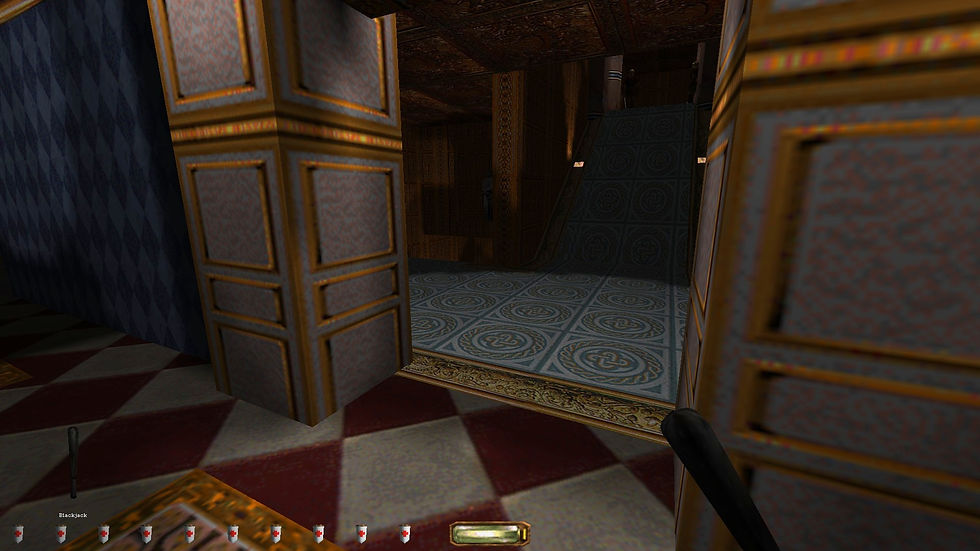
Unfortunately, this is where the quality of the missions, at least for me, starts to decline. Undercover, the last of the four Talisman missions and the first in line up of the worst missions in the game, isn’t so bad and even has an interesting premise, but the mission still has some problems. For this time Garrett needs to infiltrate a Hammerite temple disguised as a Hammerite novice. The idea of an undercover mission in Thief sounds great, however, do not expect quality Hitman or Lady Boyle’s Last Party level from Dishonored, we are still in 1998. The biggest problem is how unnecessary it is for the completion of the mission. You only need to be “disguised” to enter the temple, otherwise, you can play it as regular mission. This is mostly due to enemies being too observant, attacking you for stealing things even if they haven’t seen you doing it, meaning that in the save areas where you are allowed to be, you can only walk and look around, so the mission is pushing you into the normal Thief gameplay anyway. Which is bad by any means, but the mission’s layout and pacing is not great. The map is pretty boring, all things considered. The temple is not too tall, most of the rooms are small even the ones that are not supposed to be, like the main chapel. The map barely has any verticality and in general, the room layout is pretty simple, which makes the mission really easy to navigate, but makes it too predictable. And, at least visually, the mission feels rushed. Besides uninteresting map layout, the pacing of the mission is disappointing. When you finally find the Air Talisman, it will be locked out, with instruction next to it on how to get it. And this is where the mission forces you to backtrack through the whole mission, worst of them being the need to find 5 randomly hidden levers that you need to pull in a short time frame. All this makes the mission padded out and really gamey. And as final insult, when you pick up the Talisman, it will turn on the alarm, which you can’t avoid, making the mission impossible to ghost, which would annoy some people. Overall, it wasn’t a bad mission, I don’t hate it, but it was still disappointing and mostly boring for me.

However, Undercover wasn’t as disappointing as the next mission - Return to the Cathedral. Return to the Cathedral has a really good premise and even better opening. After finally collecting all Talismans and opening the Cathedral, Garrett can finally get inside. And this might be the most atmospheric mission in the entire game, at least for now. The music is creepy, the lighting is set up perfectly and the halls are patrolled by the undead along with the Hammer Haunts patrolling the main chapel. This is the best part of the entire mission, the first mission in the game, at least for me, that achieves the horror feel towards the undead. After stealing the Eye and trying to escape through the doors that we entered, they turn out to be locked, so now we need to find another way out, forcing us to explore deeper in the Cathedral and explore other buildings behind it. However, after such a strong opening and hook, the mission’s pacing and partially the atmosphere are thrown out of the window. After leaving the main part of the Cathedral we meet Brother Murus, a ghost of the Hammerite, who will help us escape if we complete his list of objectives. And the first problem is that Murus just doesn’t fit this mission. His voice and speech don’t sound like a tired ghost haunting this place and begging you to help him move on, but rather as an old guy who just decided to troll the living one last time, which removes a lot of the tension from the mission. The second problem is that the objectives are just fetch quests, which are fine for the Thief game, but the problem is that when Murus tells you which item to get, the information on it isn’t updated on the objective list, so if you missed it or forgot it, there is no way for you to check what you need to do. Besides that, they are not informative enough, some of them just tell you just to look around the place, But definitely the worst part about it, is that Murus tells you what he needs, one item at a time, forcing to endlessly to backtrack to him every time you find an item he needs. Finally, after getting all he needs and reading a prayer on his grave to let him move on, he asks us to help his friends too, meaning that we need to backtrack all the way back to the main Cathedral building and drag one of the two corpses at a time across the map into the cemetery. And after that, he asks us to kill all 9 Hammer Haunts on the map. Not only this is tedious, doesn’t make sense for the Thief game, personally, the fact that they can even be killed, forever ruined for this enemies, because the fact that you can just one shot them by backstabbing them, made them non-threatening for me. Only after that, Murus tells us how to escape, ending the mission.

After this mission the game plays another cutscene. Garrett finally delivers the Eye to Constantine and Victoria. They are very grateful, but exhausted Garrett doesn’t care – he just wants his money after what he had to got through. And this is when Thief pulls its main plot twist: Constantine isn’t just an eccentric, somewhat magical rich guy, he is the Trickster, The Woodsie Lord, and ancient god of nature and chaos, and Victoria is his nymph. This plot twist isn’t surprising, Constantine, Victoria and the Eye seemed evil from the start. The shock comes from the shock that Constantine is the Trickster himself. I haven’t mentioned this, but throughout the game, we receive small bits of information about the Trickster, going all the way back to the intro cutscene. There are paintings of him being banished by the Master Builder, the main religious figure of the Hammerites. Same Hammerites would say simple prayers against the trickster. His existence was foreshadowed throughout the game, and now he is here and he is real. He states that the Eye is blind, and so Victoria rips out one of Garrett’s eyes. Now, Constantine and Victoria have all they need, and so they disappear, leaving covering in fear from seeing the devil Garrett to be consumed by the plant life. Fortunately, he gets rescued by the Keepers, who tell him that he now needs to make things right, but first, he must escape the mansion. And after such a strong moment, the remaining 3 missions of the game are arguably the worst in the game. I personally don’t have much to say about them, so I’ll be brief.

The Escape! Is the first one, has an interesting idea – hurt Garrett must escape the Overgrown and changed Constantine’s mansion, avoiding the horrid creations of the Trickster and finding the rare pieces of equipment. The problem is that the level layout sucks. The worst part is obviously the layout. The map is exceptionally linear, leaving no room for exploration. All corridors and rooms are small too, meaning that you are most likely to confront the enemies. And as a final touch, there are not enough dark spots to hide in, so the level actively pushes the player to fight. And as I mentioned earlier, the Thief’s combat is not good, so the mission is slog to go through. Finally, the mission doesn’t look good. If some previous missions gave suspicions of the rushed development, now there is no doubt. The first section of the mission looks dull and the same, and the second one just reuses Constantine’s mansion, but slightly overgrown with plants. The only thing good about this mission is the writing. Looking for info on Constantine, Garrett finds his plans, on how, by using the Eye, he is going to bring chaos and darkness to City, bring the power back to nature and avenging for his banishment in the past. But aside from this little bit, the mission is mostly just annoying to play.
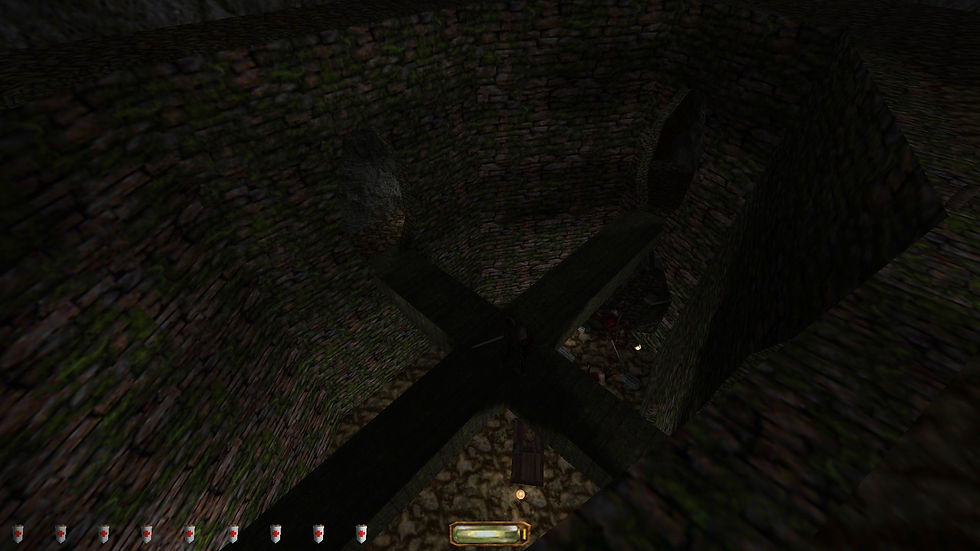
The next mission, Strange Bedfellows, is similar, except it doesn’t even have any interesting writing bits. Our goal in this mission is to assist the Hammerites, so that together we can come up with a way to stop Trickster. And this is another mission reuse, except even less interesting one. The first part of the mission is just Undercover, except there are some plants around, some pieces of environment, like windows or gears on the walls are broken, and there are some monsters. One of these, mantises, involves an annoying objective, that if you touch them, including the knockout, or they spot you, you now must kill all 4 of them. This is annoying to say the least. And the second half of the mission happens under the Hammerite temple, and this part of the mission is just dull and uninteresting, both gameplay wise being just crammed space with some grouped enemies without any interesting patrol routes, and visually being just same green, grey blob. This is perhaps one of the lowest points of the game.
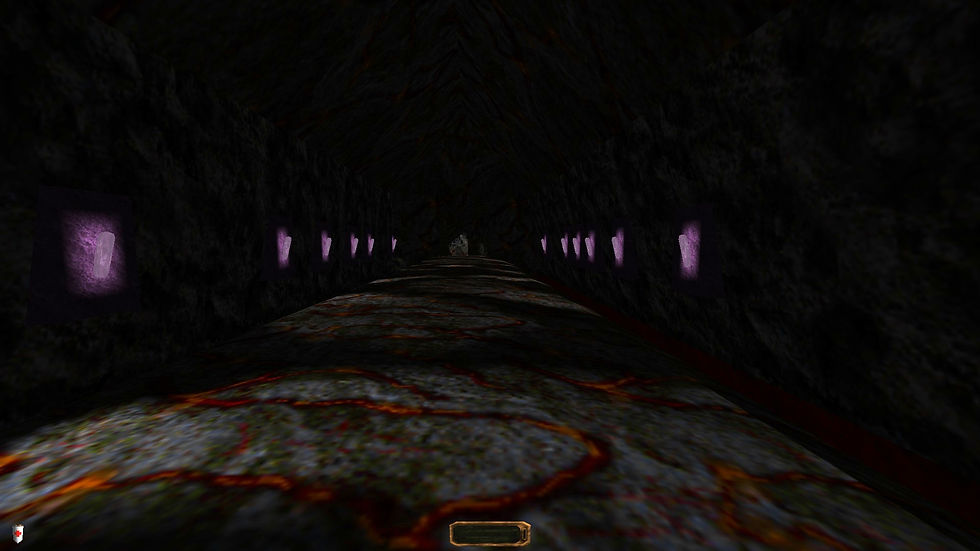
The final mission, Into the Maw of Chaos, sends us in to the real of the pagans to stop the Trickster. This is a really short mission, so I will be quick too. Visually it looks great. It constantly changes its scenery, even down to the color palette, though it is mostly just different caves, some just have plants, lava or crystals, which somewhat conveys the idea of this being the realm of chaos. Some of these sections, in addition to weird visuals would also include some gameplay gimmicks, like crystal cave would require you to slide down the icy slope, or one section requiring you to swim on the ceiling. Unfortunately, this is where the praises end, this mission is not only really easy for the final level, and it also feels gamey, just like Mage Towers. It also includes a weird objective that requires you to close the portal, which only appears by the end of the level, which in order to close you are required to use one of each 4 elemental arrows, and if you don’t have all of them by that point, you have to reload to the previous saves to make sure to bring all 4 of them. Thankfully, this is the only annoying part of this mission, because this game, unlike the reboot of the series – Thief (2014) or the games that came out around the same time as Metal Gear Solid or Tenchu, doesn’t have a boss fight. To stop the Trickster, you just need to sneak behind his back and switch the real Eye for the fake one with a bomb made by Hammerites before he finishes the ritual. It is simple, but it’s a good thing that this stealth game figured out to not include an awkward boss fight. Though, it is funny that you can just kill local Satan by sending him a pipe bomb. In the end, Trickster is stopped, the City is saved, and Garrett receives his new mechanical eye, which would become a standout part of his design. In the final cutscene, the keeper Artemus asks Garrett to return to keepers, to which Garrett rejects his offer. After that Artemus says that everything happens as it was written, and that the Metal Age is coming.
In conclusion, Thief: The Dark Project is a game that is rough around its edges, especially by its end. There are two primary reasons for that. First reason is that for most of the development, Looking Glass Studios, was sure about the genre of the game, conceptualizing the game to be about stealth only late into development. Which leads to the second issue, Thief 1 is a rushed game, for multitude of reasons, like having to work on smaller and bidder titles, like System Shock 2, at the same time when the studio was firing some of its developers. While this did make Thief: The Dark Project’s levels have mixed quality and really dropping the ball by the last few missions. However, this gave the game a really unique set of missions, some of which being real standouts, that make some fans prefer this game over the others. And finally, despite all the hardships, the studio managed to make an overall great game, but most importantly lay a great groundwork for the future game and genre in general. This combined with the experience and reception from the first game; the studio will have a chance to prove themselves once again and iterate one the work in the sequel to The Dark Project.


Comments